
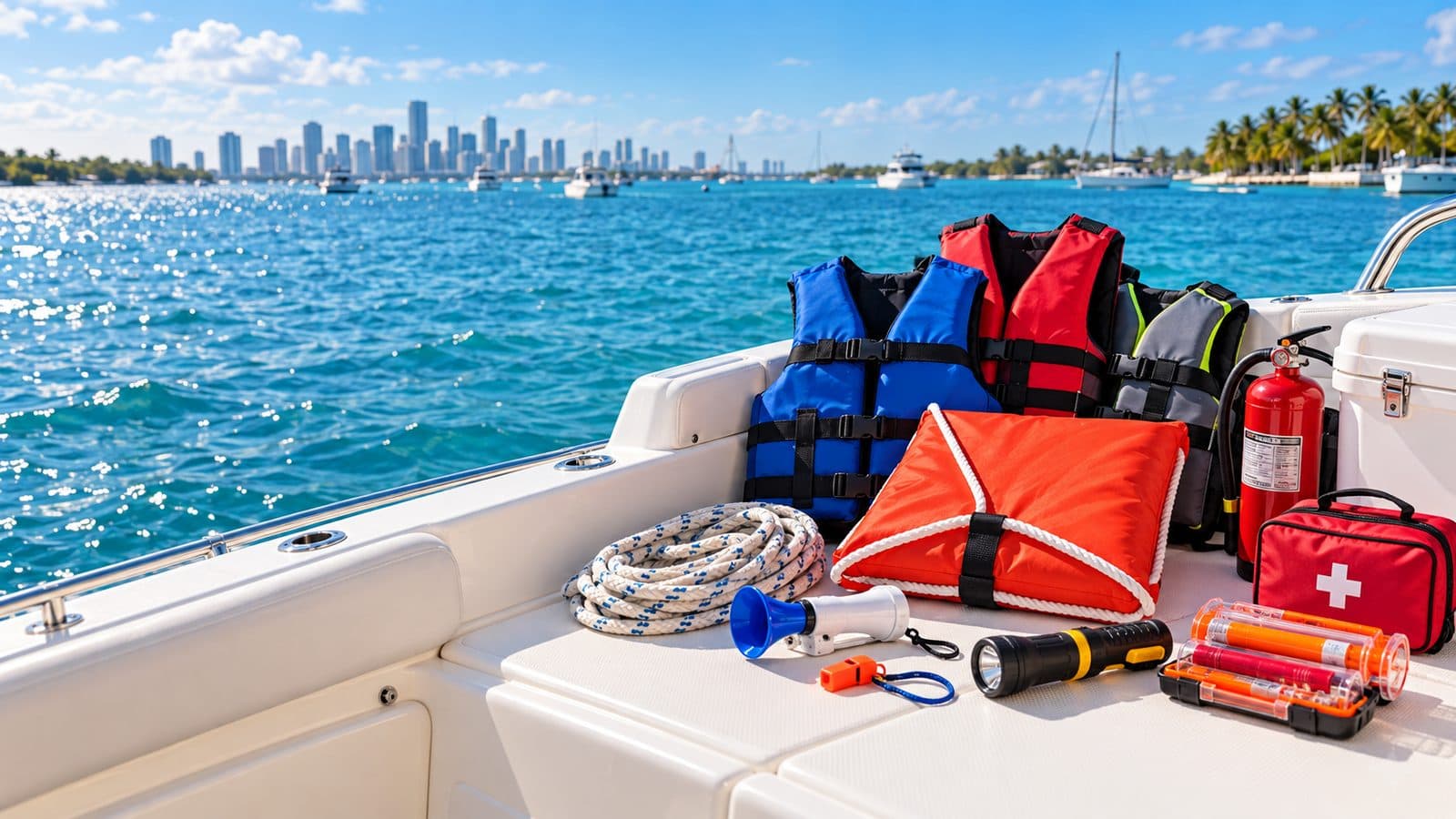
Life jackets
One wearable life jacket, Coast Guard approved and the right size, for every single person on board. Not one per seat, not one per adult: one per person, sized for that person.
On a vessel 16 feet or longer you also need one throwable flotation device, kept where somebody could actually reach it in a hurry. Canoes and kayaks are excepted from the throwable rule whatever their length.
What you need, by boat length
| Requirement | Under 16 ft | 16 ft and over |
|---|---|---|
| Wearable life jacket per person | Yes | Yes |
| Throwable flotation device | No | Yes |
| Fire extinguisher | If the boat has enclosed fuel or engine spaces | If the boat has enclosed fuel or engine spaces |
| Visual distress signals, coastal waters | Night signals | Day and night signals |
| Sound-producing device | Yes | Yes |
| Navigation lights after dark | Yes | Yes |
Read that table as a starting point rather than the statute. Requirements turn on the kind of boat as well as its length — whether it is powered, whether it has enclosed compartments, whether you are in coastal or inland water — and the course goes through the combinations properly.
Fire extinguishers
Required where the boat has spaces that can trap fuel vapor: an enclosed engine compartment, closed living spaces, permanently installed tanks. Most open boats with a portable tank and an outboard are exempt, which catches people out when they move up to a bigger boat.
Extinguishers manufactured after a certain date now carry a service life, and an expired one does not count. Check the date and the gauge before the season rather than at the ramp.
Signals, sound and lights
- A sound-producing device — a whistle or horn that works without power
- Visual distress signals appropriate to where you are boating
- Navigation lights, tested before you need them
- A working VHF radio, which is not required but is the thing that actually gets help
Flares have expiration dates printed on them and out-of-date flares do not satisfy the requirement. Electronic distress lights are an alternative for night signaling and do not expire, which is why many people carry them now.
The engine cut-off switch
Federal law requires operators of many smaller powerboats to use the engine cut-off switch link — the lanyard — when the boat is on plane or above displacement speed. The point is blunt: a boat whose operator has gone over the side should stop rather than circle back.
Florida applies the same thinking to personal watercraft, where the lanyard has to be attached to the operator, their clothing or their life jacket.
The things that actually fail an inspection
Officers rarely find a boat with nothing aboard. What they find is equipment that does not count:
- Life jackets in a sealed bag under a bench, or the wrong size for the children aboard
- An extinguisher with a discharged gauge or past its service life
- Flares that expired two seasons ago
- A registration that is current but not aboard
- An operator without their education card
The last one is the cheapest to fix and the easiest to forget. If you are unsure whether it applies to you, that is answered in do you need a Florida boating license.
Common questions
How many life jackets does a boat need in Florida?
One wearable life jacket in the correct size for every person aboard, and on a boat 16 feet or longer, one throwable device as well. Canoes and kayaks of any length are excepted from the throwable requirement.
Do children have to wear a life jacket in Florida?
Yes. Children under six must wear a life jacket while a vessel under 26 feet is under way. The law requires wearing it. Having it aboard is not enough.
Does a life jacket expire?
There is no printed expiration date, but a jacket that is torn, mildewed, missing straps or no longer buoyant does not count as serviceable, and an officer can cite you for it. Replace anything you would not want to rely on.
What is the engine cut-off switch rule?
Federal law requires the operator of many smaller powerboats to use the engine cut-off switch link while on plane or above displacement speed. Florida enforces it alongside its own rules for personal watercraft.
This article explains Florida boating rules in plain terms. It is not legal advice, and the law is what the statute says rather than what we summarise. The Florida Fish and Wildlife Conservation Commission publishes the current requirements.
Keep reading
6 min read
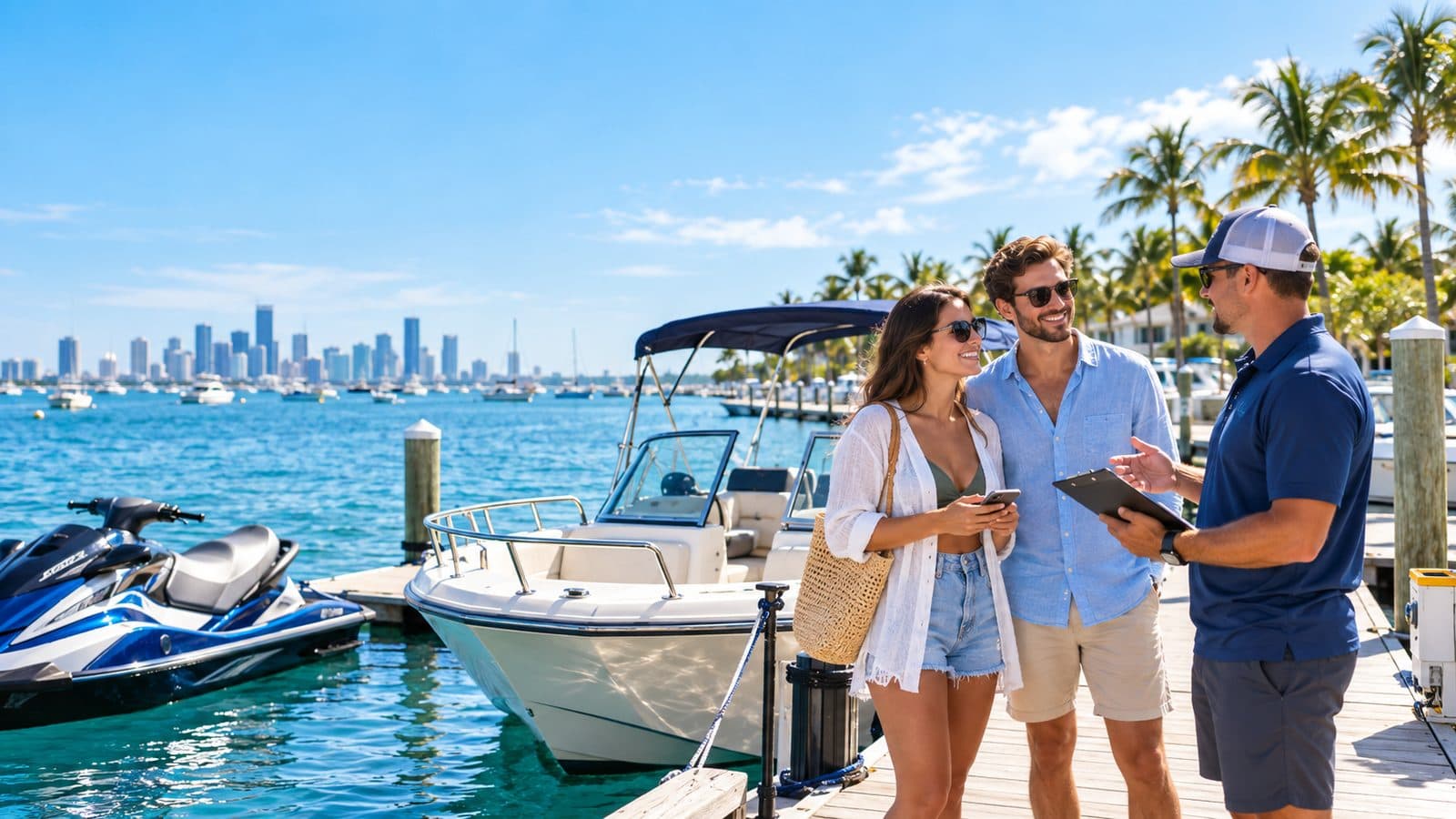
Do you need a Florida boating license?
Florida does not issue a boating license. It requires a Boating Safety Education ID Card, and only from some operators. Here is how to tell whether you are one of them.

7 min read
How to get your Florida boating license online
The whole process, start to finish: what the course covers, what the exam asks, what you can print the same day, and when the permanent card arrives.
5 min read
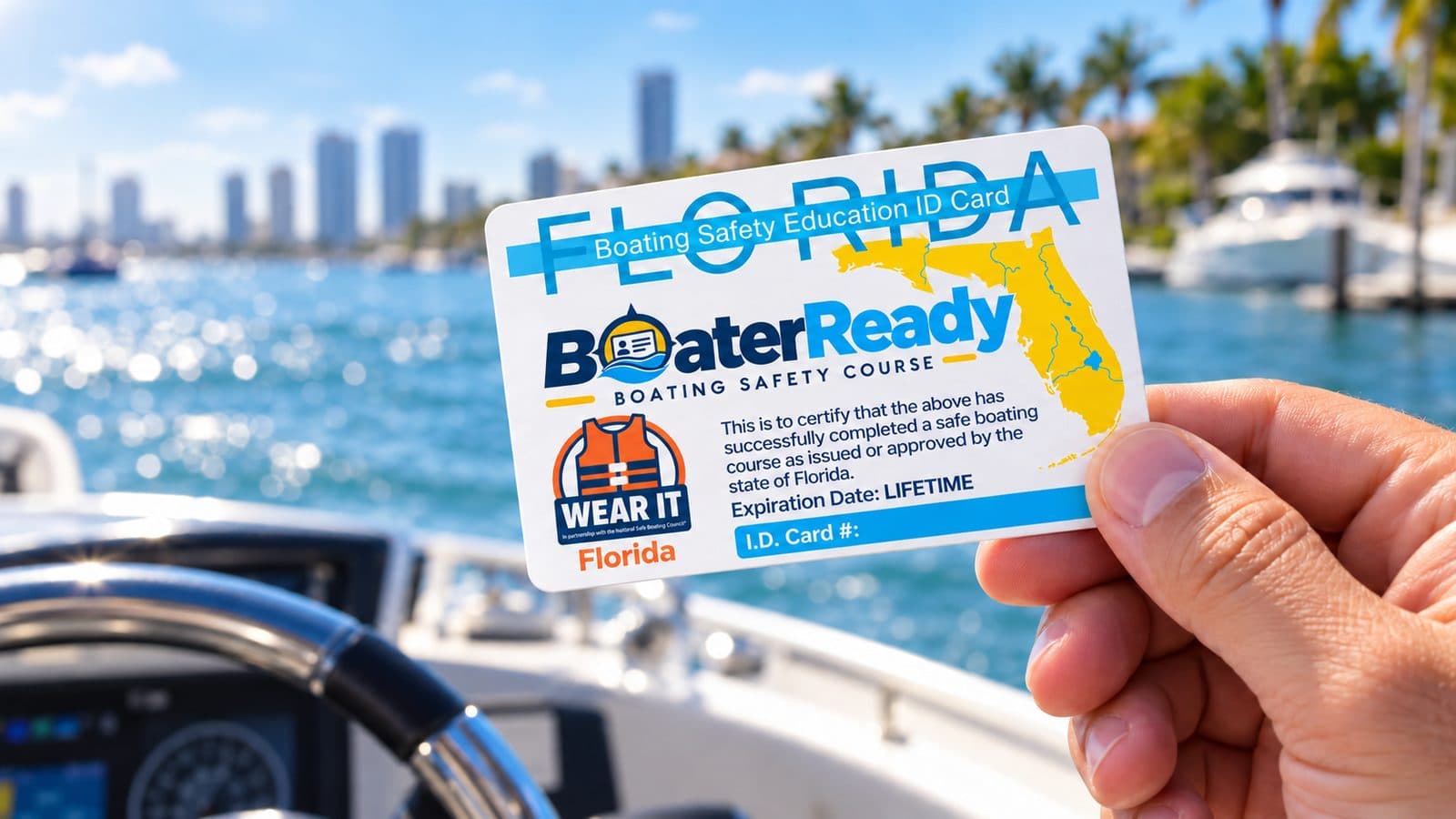
What the Boating Safety Education ID Card actually is
The card Florida issues instead of a boating license: who issues it, what is printed on it, whether it expires, and what to do when you lose it.